
Ferret Setup Guide
Everything you need to know before bringing a ferret home. Housing, litter training, ferret-proofing, vet care, and building a bond with your new pet.
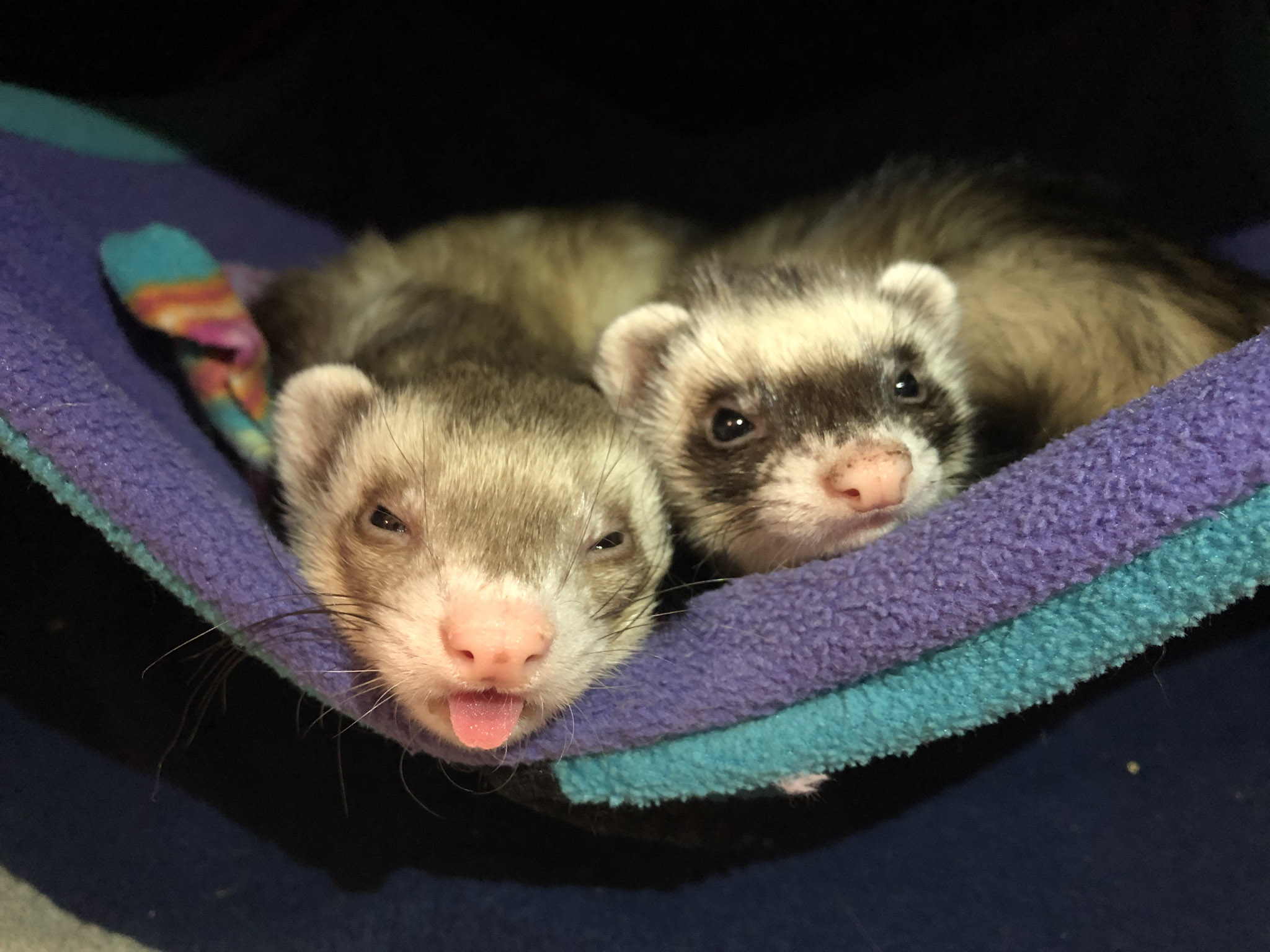
How Many Ferrets to Get
Overview
Domestic ferrets are significantly more social than their wild polecat ancestors. Domestication retained juvenile social behaviors, meaning pet ferrets generally thrive with companionship . That said, individual temperaments vary, some ferrets are happier as the only pet, especially if their owner spends significant time playing and interacting with them. Two ferrets is the most common recommendation because they entertain each other during the long hours you are at work or asleep.
What to do
- Two ferrets is the practical sweet spot, they play together, sleep together, and perform mutual grooming
- A solo ferret can be perfectly happy if you provide at least 3-4 hours of daily interaction and playtime
- When introducing a new ferret, expect initial squabbling and scruff-dragging as they establish a pecking order, this typically settles within days
- Neutering decreases aggressive behavior and is recommended for all pet ferrets
Common mistakes
- Getting a second ferret solely to "fix" behavioral problems, the root cause may be health, boredom, or environment, not loneliness
- Introducing an unneutered male to a group, this increases aggression and territorial behavior
- Assuming all ferrets will bond instantly, some need a slow, supervised introduction over days or weeks
Cage Size and Setup
Overview
Ferrets are intelligent, curious animals that are unsuitable for continuous confinement. The cage is a safe home base for when you cannot supervise, not a permanent living space. Minimum cage size is 24 x 24 x 18 inches for up to two ferrets, though larger multi-level cages like the Ferret Nation or Critter Nation are strongly preferred . Some owners connect two or more Ferret Nation units together for additional vertical space, which ferrets use well. Wire caging is ideal; glass tanks are unsuitable due to poor ventilation . Every ferret needs at least one dark, enclosed sleeping area, hammocks, fleece-lined beds, or a simple towel in a box all work well .
What to do
- Get the largest multi-level cage you can afford, Ferret Nation and Critter Nation are the community standard
- Provide at least one dark, enclosed sleeping area per ferret, though they will often all sleep together
- Hammocks, slings, fleece-lined baskets, and tubes all serve as excellent sleep and play areas
- Place the litter box in a corner the ferret naturally chooses, they will back into corners to eliminate
- Keep the cage in a room between 59-70°F (15-21°C). Ferrets have no sweat glands and cannot tolerate temperatures above 90°F (32°C)
Common mistakes
- Glass aquariums, poor ventilation and dangerously hot in warm rooms
- Wooden cages as the sole enclosure, they absorb urine and become unsanitary
- Wire-bottom floors without solid covering, these hurt ferret feet
- Placing the cage in direct sunlight or near heat sources, overheating is life-threatening
Litter Training
Overview
Ferrets naturally use specific latrine areas and invariably select corners, backing up until their back touches the walls before eliminating . This instinct is your biggest advantage in litter training. They do not bury their waste. Because of their short digestive tract, ferrets need to defecate frequently, especially at the beginning and end of activity periods or after eating . Success depends on working with this natural behavior rather than against it.
What to do
- Let the ferret choose their preferred corner first, then place the litter box there, do not fight their instinct
- Use corner-shaped trays with low sides in front and high sides in back to protect walls
- Place at least one litter box in every room the ferret has access to, their short GI transit means they cannot hold it long
- Use paper-based or pelleted litter at a shallow depth
- Clean litter boxes daily, ferrets will refuse a dirty box and choose a new corner
Common mistakes
- Clay litter, ferrets dig and may inhale dust, and it tracks badly on paws
- Clumping litter, dangerous if ingested during grooming, and ferrets dig in litter boxes
- Cedar or pine shavings, the aromatic oils are respiratory irritants for small animals
- Expecting 100% accuracy, most ferrets are about 90% reliable. Accidents happen, especially in new spaces
Ferret-Proofing Your Home
SafetyOverview
Ferrets are natural tunnel-dwellers that can squeeze through any gap their head fits through. They burrow into soft foam rubber, chew electrical wires, and explore behind and inside appliances. Foam rubber ingestion is the most frequent cause of gastrointestinal obstruction in ferrets under one year old . Reclining chairs are specifically implicated in ferret deaths, ferrets climb into the mechanism and are crushed when the chair is operated . Ferret-proofing is not optional.
What to do
- Block all gaps under and behind appliances, cabinets, and furniture, if their head fits, their body follows
- Cover the undersides of couches, chairs, and mattresses with thin wood or hardware cloth to prevent burrowing
- Keep toilet lids down, secure cleaning supplies and medications in locked cupboards
- Cover or encase electrical wiring, ferrets chew cables
- Always check inside washing machines and dryers before operating
- Cover soil in plant pots or move plants out of reach, ferrets will dig in soil
Common mistakes
- Reclining chairs, remove them entirely from any room where ferrets play. Ferrets climb into the mechanism and are crushed
- Foam rubber and soft rubber items anywhere ferrets can reach, dog toys, athletic shoes, rubber bands, pipe insulation, speakers, headphones. Ingestion causes life-threatening GI blockages
- Leaving gaps in floorboards, skirting boards, or under doors, ferrets will find and exploit them
- Assuming a room is safe without getting down on the floor and checking from ferret height
Smell and Odor Management
Overview
Ferrets have a distinct musky smell that comes primarily from their very active sebaceous (oil) glands in the skin, not from their anal glands . Descenting (surgical removal of anal glands) does not significantly reduce the everyday ferret smell because the anal gland secretion only produces a brief, pungent odor that dissipates within minutes and is rarely expressed in mature ferrets. Most pet ferrets purchased from U.S. breeders are already descented at 5-6 weeks old, but this is a convenience practice, not a necessity . The real odor control comes from diet, clean bedding, and appropriate bathing frequency.
What to do
- Feed a high-quality, meat-based diet, poor diet is the single biggest cause of excessive ferret odor
- Wash all bedding, hammocks, and cage liners weekly, dirty bedding is the #2 odor source
- Bathe your ferret no more than once per month. Over-bathing strips the natural oils and causes the sebaceous glands to overproduce, making the smell worse
- Clean litter boxes daily, stale waste produces far more odor than the ferret itself
- Intact (unspayed/unneutered) ferrets smell significantly stronger due to increased sebaceous secretions, especially during breeding season
Common mistakes
- Frequent bathing, this is the most common mistake new owners make. It makes the smell worse, not better
- Descenting as an odor solution, it does not address the main source of ferret smell
- Scented litter, air fresheners, or sprays near the cage, these mask smell temporarily and can irritate ferret respiratory systems
- Neglecting bedding, even a clean ferret will smell if sleeping in unwashed fabric
First Vet Visit
Overview
Find an exotic vet who sees ferrets before you bring your ferret home, not all vets are trained in ferret medicine. The first visit should happen within the first two weeks. Young ferrets need a series of distemper vaccinations and their first rabies vaccine. Ferrets aged 4-5 years should be examined annually, and middle-aged to older ferrets should be seen twice yearly due to the high incidence of metabolic disease and cancer in this species .
What to do
- Search for an exotic animal veterinarian in your area before adoption, ferret.vet maintains a vet finder map
- Young ferrets need serial canine distemper vaccinations: 2 initial vaccinations starting at 8-9 weeks, 4 weeks apart, then boosters every 3 years
- Rabies vaccination starts at 3 months old, then annual boosters. The killed vaccine (Imrab-3) is the approved option
- From age 3 onward, schedule vet visits every 6 months with blood glucose monitoring, insulinoma and adrenal disease are extremely common
- Record your ferret's baseline weight at the first visit and track it monthly at home
Common mistakes
- Waiting until your ferret is sick to find a vet, exotic vet availability varies widely by region
- Skipping annual boosters, canine distemper is nearly 100% fatal in ferrets
- Using a vet unfamiliar with ferrets, medication dosing, anesthesia protocols, and disease presentations differ significantly from dogs and cats
- Skipping the twice-yearly exams after age 3, many ferret diseases are manageable when caught early but fatal when caught late
Handling and Bonding
Overview
Most ferrets are docile and can be handled easily, but young ferrets often nip, and ferrets that have not been frequently handled may bite harder . Unlike dogs and cats, ferrets may bite without the typical warning signals, no growling, no raised hackles, just a sudden nip. This is not aggression; it is how ferrets explore the world. Scruffing (gently grasping the loose skin at the back of the neck) is the standard handling technique, most ferrets become very relaxed and compliant when scruffed .
What to do
- Scruffing is safe and calming, gently grasp the loose skin at the back of the neck and support the body with your other hand
- Build trust through hand-feeding treats, freeze-dried meat treats work well for this
- Start with short handling sessions and gradually increase duration as trust builds
- A high-pitched "yip" mimics how ferrets tell each other a bite was too hard, followed by a brief time-out
- Distraction with a small dab of salmon oil or meat paste on a spoon can help during handling practice
Common mistakes
- Using leather gloves, they interfere with dexterity, cannot be disinfected, and a determined ferret will bite through them anyway
- Pulling a ferret's legs backward during restraint, they will struggle and become more stressed
- Flicking, hitting, or shaking a ferret as punishment, this increases fear-based biting
- Giving up on a nippy ferret too quickly, most ferrets learn bite inhibition within a few weeks of consistent, gentle training
Single-ingredient meat treats, perfect for bonding and building trust.
Sleep and Schedule
Overview
Ferrets sleep at least 12-18 hours per day, with older ferrets sleeping up to 22 hours . Some sources report 18-20 hours as typical . They prefer warm, dark, enclosed sleeping areas that mimic underground burrows . Ferrets are naturally crepuscular to nocturnal, most active at dawn and dusk, but they adapt remarkably well to their owner's schedule . Their activity pattern is "all or nothing": deeply asleep or intensely active, with little in between.
What to do
- Structure playtime for morning and evening when ferrets are naturally most active, 3-4 hours of supervised play daily is the target
- Provide dark, enclosed sleeping areas in the cage, hammocks, fleece pouches, or a towel in a box. At least one per ferret
- Expect your ferret to adapt to your schedule over time, they will learn when you wake up, come home, and start play sessions
- Do not be alarmed by "dead ferret sleep", ferrets sleep so deeply they may appear limp and unresponsive. This is completely normal
Common mistakes
- Waking a ferret from deep sleep suddenly, startled ferrets may nip reflexively, especially deaf ferrets
- Keeping a ferret in a room with constant light and noise, they need dark, quiet rest periods
- Assuming long sleep means illness in a new ferret, 14-20 hours of sleep per day is normal. Illness is indicated by lethargy when awake, not by sleeping a lot
- Restricting cage time to force activity, ferrets choose their own sleep-wake cycles and forcing wakefulness causes stress
Setup guidance is sourced from Delaney (2017) Ferret Medicine and Surgery, Lewington (2007) Ferret Husbandry Medicine and Surgery, Quesenberry & Carpenter (2020) Ferrets Rabbits and Rodents, and Fox & Marini (2014) Biology and Diseases of the Ferret. View our sources →
Stay current on ferret care.
Join our email list for tips on housing, diet, health, and enrichment.
We also recommend bookmarking this site for quick reference.