
Ferret care information you can actually trust.
The resource we wished existed when we brought home our first ferret — reliable ferret care from vet literature, community knowledge, and real experience.
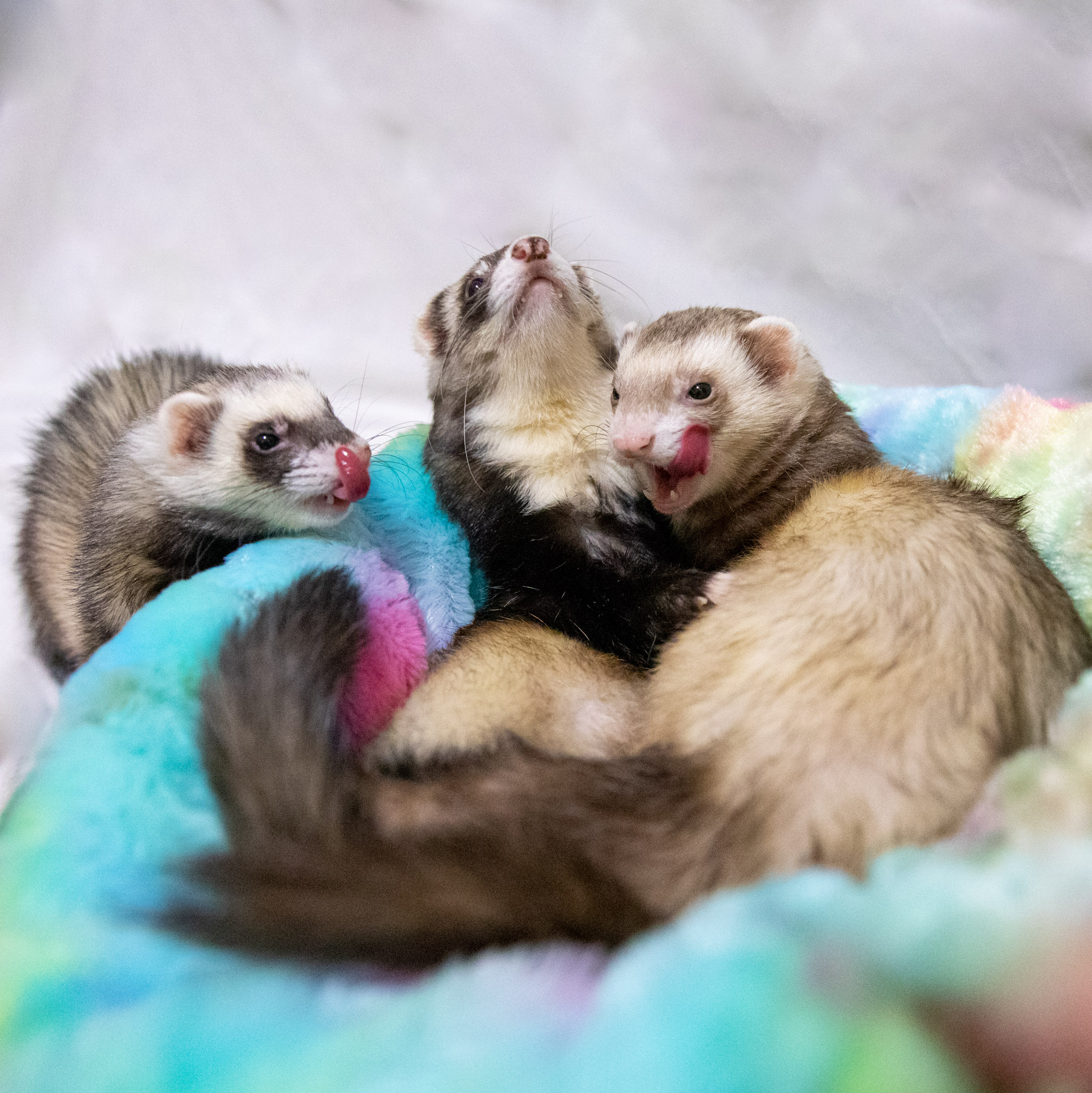
Coda, Kali, and Mishka. The original business partners.
The Tools

Is This Safe?
Check if a food, plant, or item is safe for your ferret
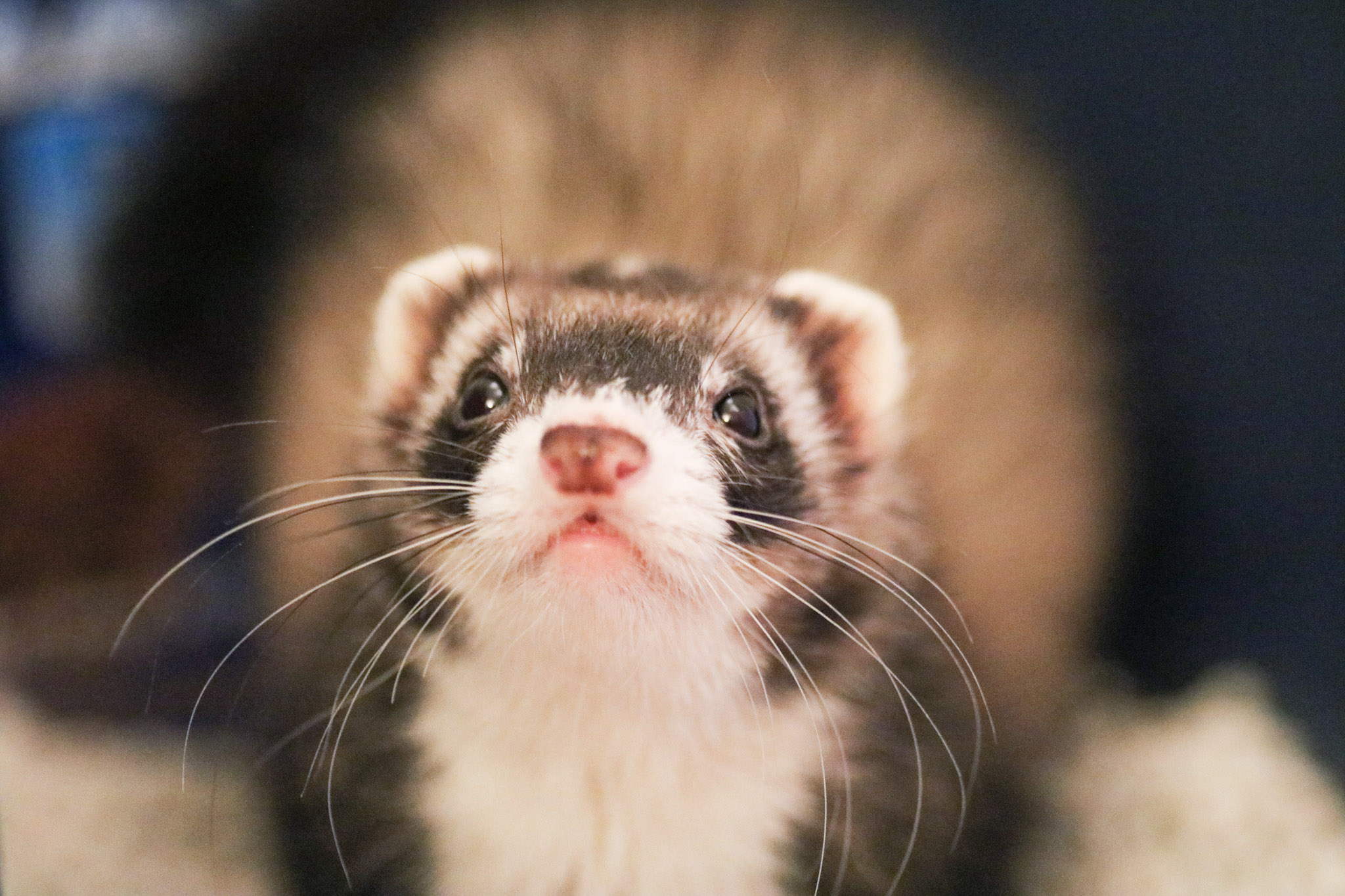
Food Scanner
Analyze pet food ingredients for ferret safety
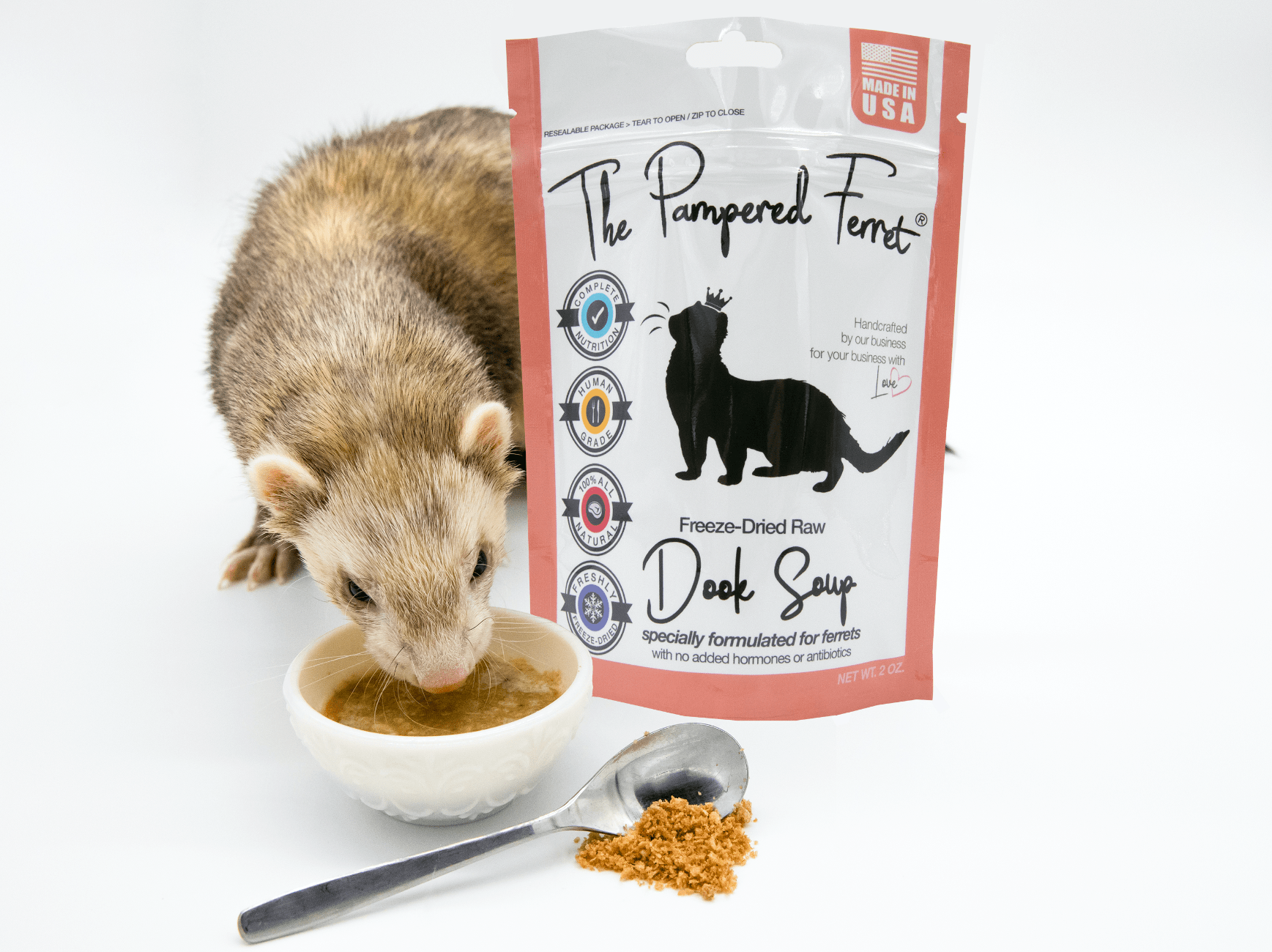
Diet Builder
Get a personalized feeding plan for your ferret

Feeding Calculator
Find out how much your ferret should eat each day, on any food

Ferret Q&A
Answers to 90+ common ferret care questions, backed by veterinary research
We Were You.
The Pampered Ferret started with a ferret in a cardboard box, a bag of the wrong food, and an emergency surgery we never saw coming.
Sara walked into a pet store in January 2017 and did what any rational person does when they suspect they might be allergic to an animal: she picked one up and rubbed it on her face 😄. Nothing happened. She stood there in the middle of a pet store and cried, because she had finally found a snuggly companion she could actually hold without her face swelling shut. That ferret came home with us in a tiny cardboard box, along with a bag of Marshall food, some crummy toy from the small animal aisle, and a care pamphlet that was, we later discovered, almost entirely wrong.
We named her Coda. We thought we were ready because we had bought everything at the store with the word 'ferret' on it. We were not ready. Coda ended up in emergency surgery not long after. The thing is, most pet stores keep ferrets in the rodent section. Same aisle, same cages, same products. It makes sense from a retail floor plan perspective. It makes no sense biologically. Ferrets are not rodents. They are obligate carnivores with specific dietary needs, and most of what gets sold alongside them reflects that same misunderstanding.
So we did what two people with PhDs do when something does not make sense: we pulled on the thread. We talked to exotic vets, hired board-certified veterinary nutritionists, and worked through veterinary textbooks until we actually understood the biology. What we found was that Coda's situation was not unusual. More than 90% of ferrets come home from pet stores carrying the same wrong food, the same bad advice, and the same avoidable risks. The food on those shelves causes bladder stones, organ failure, and cancer. The treats are worse. And that care pamphlet they hand you on the way out? Still wrong.
We built The Pampered Ferret in our kitchen in 2020 because nothing safe existed and we were tired of watching a fixable problem keep hurting animals. Coda and our second ferret Kali deserved better. So does every ferret going home in a cardboard box today. Our goal has always been the same: get good products and real education into owners' hands before the damage is done. That is what this site is.
This is the education the pet store should have given you.
Nick holds a PhD in Earth Science and Sara a doctorate in Music Composition. Neither of us are veterinarians. What we are is researchers who know how to find the right experts, ask the right questions, and not stop until we understand the problem completely. Every answer on this site exists because we learned it the hard way first. It is also why we built The Pampered Ferret, because once we understood the problem, we could not just research our way out of it. We had to make something better.
Dr. Nick Rosenau
Chief of Ferret Operations
Dr. Sara Corry
Chief Executive Weasel Officer

Our Sources
Safety ratings and dietary guidance draw from published veterinary research on mustelid nutrition and toxicology.
AAFCO & NRC Standards →Macro targets (protein, fat, fiber) are checked against published ferret nutrition research and NRC nutrient data.
Ferret Community Knowledge →Practical guidance is informed by experienced breeders, shelter operators, and ferret veterinarians.
Stay in the Loop
New tools, updated safety data, and ferret care tips. Free, no spam.
We also recommend bookmarking this site for quick reference.