
Ferret Grooming Guide
What to do, how often to do it, and what to watch for.
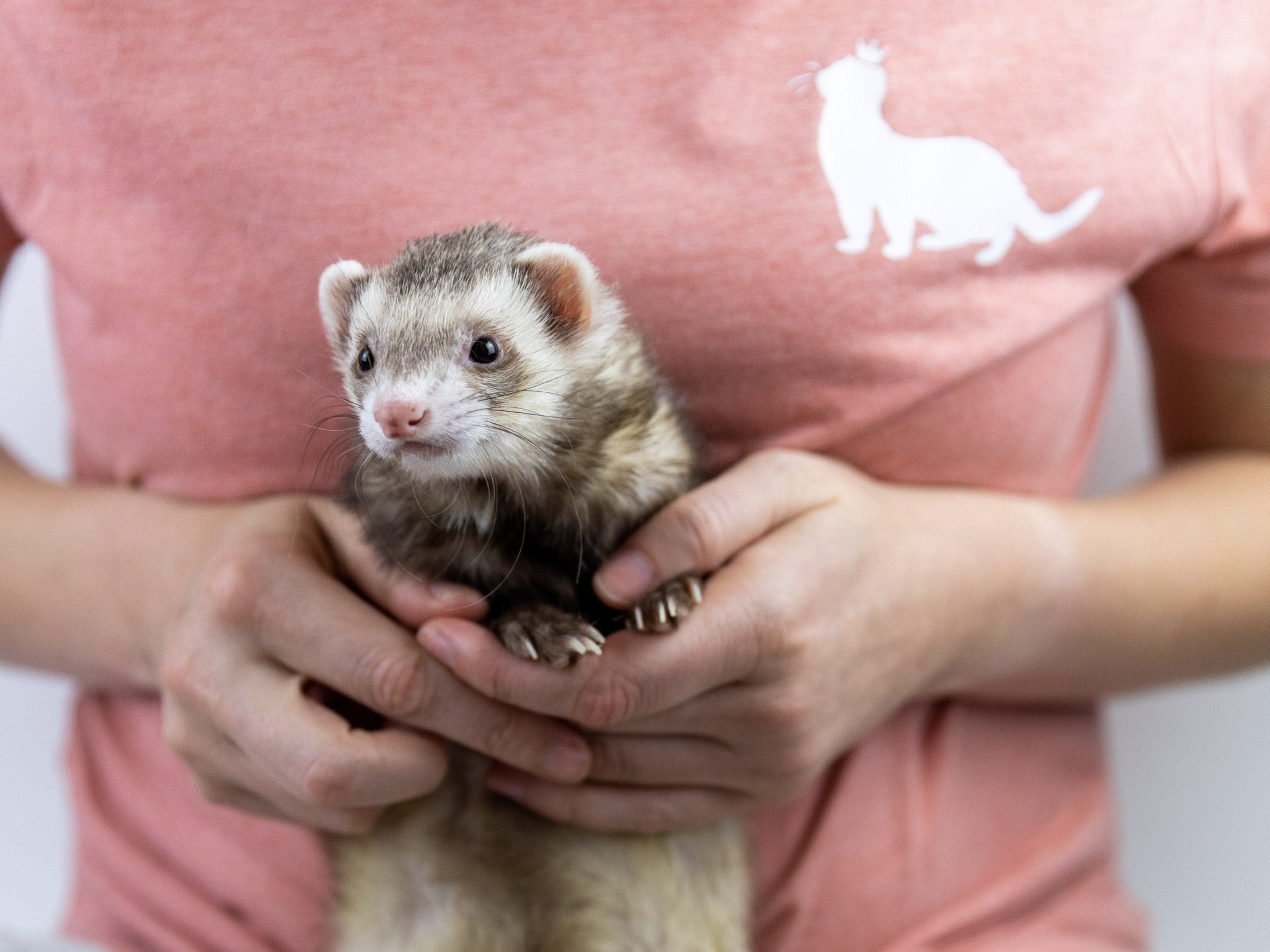
Grooming at a Glance
| Task | Frequency | Products | Status |
|---|---|---|---|
| Nail Trimming | Every 1-3 weeks | Dook Soup, Salmon Oil | Normal |
| Ear Cleaning | When dirty | Ferret-safe ear cleaner | Watch |
| Bathing | Once a month | TPF Bath Soak | Normal |
| Coat / Shedding | Seasonal (spring & autumn) | Coat Oil, Salmon Oil | Normal |
| Teeth & Gums | Check monthly, vet annually | None | Watch |
| Paw & Pad Care | Check weekly | TPF Paw Balm, Dook Soup | Normal |
Each section below is labeled so you can quickly tell what is routine care, what is worth monitoring, and what needs a vet visit.
Nail Trimming
Ferret nails grow quickly and curl if left too long, which causes discomfort and can snag on fabric or cage bars. Trim all 18 nails (5 on each front paw, 4 on each back paw). Use small animal nail clippers or human nail scissors. Trim just the tip to avoid the quick, which is the pink blood vessel visible in light-colored nails. Dark nails make the quick harder to see; trim conservatively and take less off more frequently.
The scruff-and-distract method works well: scruff your ferret gently to keep them still while a second person trims, or dab a small amount of Dook Soup or salmon oil on your stomach and let them lick while you trim solo. Most ferrets tolerate this well once it becomes routine.
If you cut the quick and see bleeding, apply styptic powder or cornstarch to stop it. It looks alarming but resolves quickly.
Ear Cleaning
Ferret ears produce a dark reddish-brown waxy discharge. This is normal. Clean ears only when you see visible buildup; over-cleaning irritates the ear canal and can cause more problems than it solves.
Use a ferret-safe ear cleaner or a small amount of mineral oil on a cotton ball. Wipe the outer ear canal gently. Never insert anything deep into the ear canal.
Check ears during your regular handling routine. Signs that need a vet visit: strong odor, excessive scratching at ears, head shaking, dark crumbly discharge that looks like coffee grounds (this can indicate ear mites), or any redness and swelling inside the ear.
Bathing
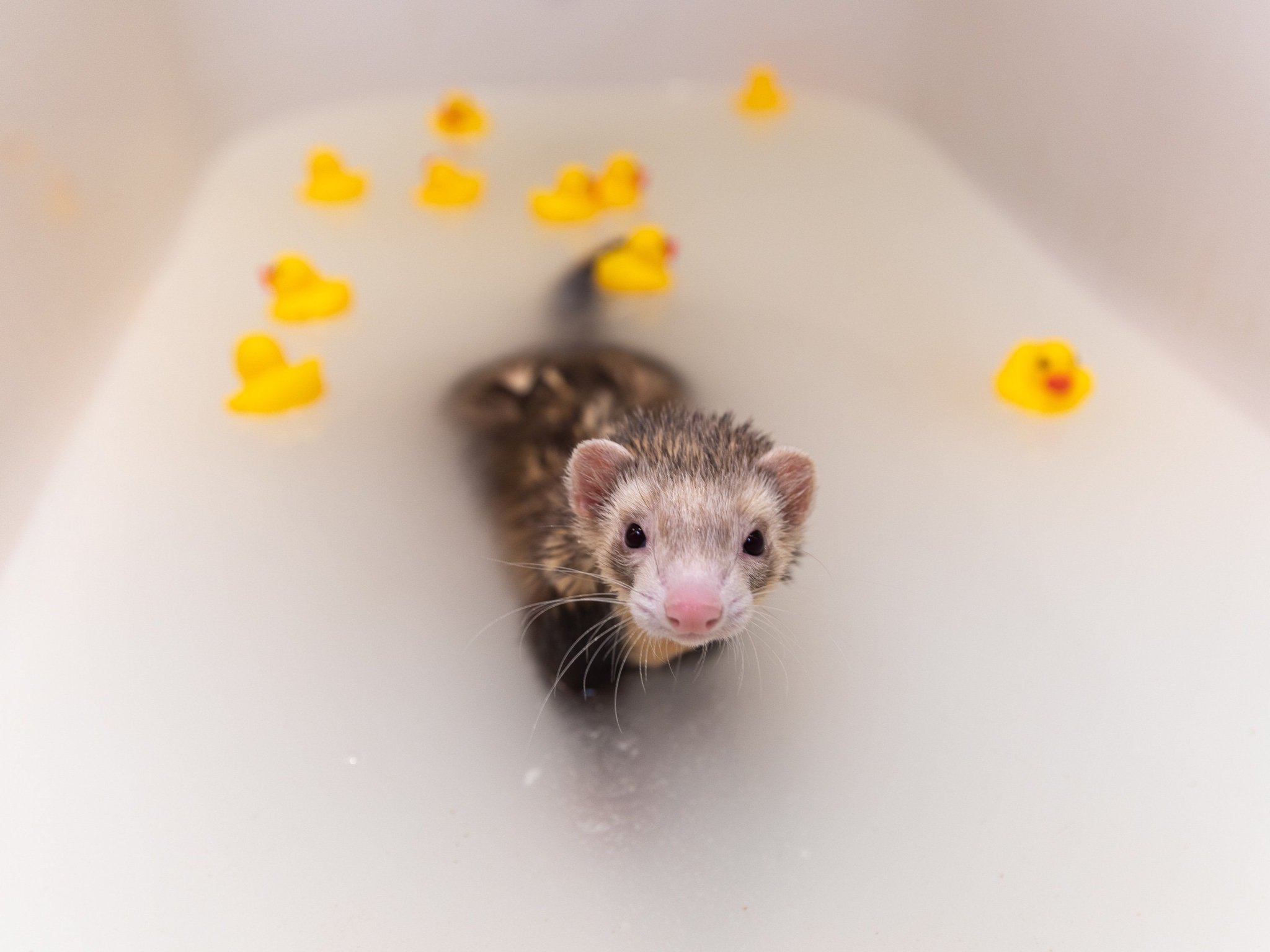
Bathing too frequently strips the skin's natural oils and causes musk glands to overproduce, which makes your ferret smell worse over time, not better. Once a month is the right frequency for most ferrets.
Use a ferret-safe shampoo formulated for sensitive skin. TPF Bath Soak is designed specifically for ferret skin and coat. Use lukewarm water, never hot. Support your ferret's body throughout. Most dislike the feeling of floating. Keep bath time short and focused.
Dry thoroughly with a warm towel. Ferrets lose body heat quickly when wet. Expect the weasel war dance immediately after. This is normal and means your ferret is happy and dry.
Never use human shampoo, dish soap, or dog/cat shampoo. These disrupt ferret skin pH.
Coat Care and Shedding
Ferrets shed twice a year, in spring and autumn, as they transition between their thinner summer coat and thicker winter coat. During shed season you will notice significantly more loose fur, possible thinning at the tail, and a duller coat temporarily. This is normal.
Brushing with a soft slicker brush during shed season helps remove loose fur and reduces the amount your ferret ingests while grooming. Ferrets can develop hairballs, though less commonly than cats.
Coat oil supports skin health and coat condition during dry or shedding seasons. Salmon oil provides omega-3 fatty acids that support coat quality from the inside. Both can be added to food or offered directly.
A dull, thin, or patchy coat outside of seasonal shed, especially starting at the tail, can be an early sign of adrenal disease. If coat changes persist outside of shed season, see your exotic vet.
Teeth and Gum Health
Ferrets are prone to dental disease, particularly tartar buildup and gum inflammation. Raw-fed ferrets generally have better dental health than kibble-fed ferrets because chewing raw meat and bone provides natural mechanical cleaning.
Check teeth monthly during your regular handling routine. Healthy gums are pink and firm. Healthy teeth are white to slightly off-white with no heavy brown or yellow buildup.
Signs to watch for: brown or yellow tartar on the back molars, red or swollen gums, pawing at the mouth, dropping food while eating, or reduced appetite. These warrant a vet visit. Ferrets with significant tartar buildup need a professional dental cleaning under anesthesia; this is standard exotic vet care.
Home toothbrushing is possible with a soft-bristled brush and ferret-safe toothpaste, but most ferrets tolerate it poorly. Consistency matters more than perfection. Even occasional brushing is better than none.
Paw and Pad Care
Ferret paw pads can dry out and crack, particularly in winter or in homes with dry air. Cracked pads are uncomfortable and can become sore if left untreated.
Check pads weekly when trimming nails. Healthy pads are smooth and slightly firm. Dry or cracked pads benefit from a small amount of paw balm massaged in gently. TPF Paw Balm is formulated for ferret skin and is safe if licked. Apply a thin layer and distract your ferret with Dook Soup or salmon oil while it absorbs.
Check between the toes for debris, matted fur, or any swelling. Limping, favoring a paw, or visible injury needs a vet visit.
Grooming guidance informed by Delaney (2017) Ferret Medicine and Surgery and Fox & Marini (2014) Biology and Diseases of the Ferret. View our sources →
Stay current on ferret care.
New guides, tools, and ferret care research from TPF. No noise, no spam.
We also recommend bookmarking this site for quick reference.